Environmental Variations
The brain mechanism of expected and unexpected uncertainty and their contribution in behavior strategies
Internal Physiological States
The role of internal physiological states such as thirst, hunger, and stress in adaptive behavior
Competing Motivations
Neural circuits underlying value-based choice under competing motivations
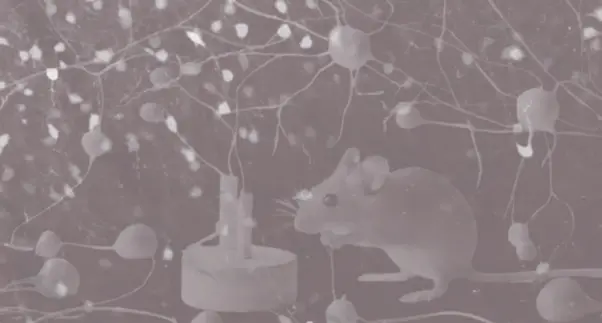
Our group is interested in how the brain enables adaptive behaviour—our ability to adjust what we do depending on internal needs, external circumstances, and past experience. Choices that seem simple, like whether to wait for a better option, take a risk, or act quickly under threat, in fact depend on complex interactions between brain circuits. When these systems work well, they let us balance exploration and exploitation, navigate uncertainty, and resolve conflicts between competing motivations. When they break down, behaviour can become rigid or unstable, contributing to mental health conditions such as addiction, depression, anxiety, and obsessive-compulsive disorder.
To uncover these mechanisms, we design novel behavioural tasks, utilize computational modelling of neuronal activity and behaviour, and combine them with cutting-edge neuroscience techniques. The techniques range from miniaturized two-photon imaging, Neuropixels recordings, EEG, and fibre photometry to capture neural activity across the brain in freely moving mice; to methods that track body signals such as EMG, ECG, body temperature monitoring, pulse oximetry, and pupillometry; and to cell-type-specific manipulations with optogenetics and chemogenetics. By linking neural and physiological dynamics to behaviour across a variety of contexts—whether shaped by hunger, stress, risk, uncertainty, or threat—we aim to build a deeper understanding of how the brain supports behavioural adaptation. Ultimately, this knowledge can help explain why decision-making sometimes goes awry and point the way toward strategies for restoring flexibility when it is lost.
To uncover these mechanisms, we design novel behavioural tasks, utilize computational modelling of neuronal activity and behaviour, and combine them with cutting-edge neuroscience techniques. The techniques range from miniaturized two-photon imaging, Neuropixels recordings, EEG, and fibre photometry to capture neural activity across the brain in freely moving mice; to methods that track body signals such as EMG, ECG, body temperature monitoring, pulse oximetry, and pupillometry; and to cell-type-specific manipulations with optogenetics and chemogenetics. By linking neural and physiological dynamics to behaviour across a variety of contexts—whether shaped by hunger, stress, risk, uncertainty, or threat—we aim to build a deeper understanding of how the brain supports behavioural adaptation. Ultimately, this knowledge can help explain why decision-making sometimes goes awry and point the way toward strategies for restoring flexibility when it is lost.